

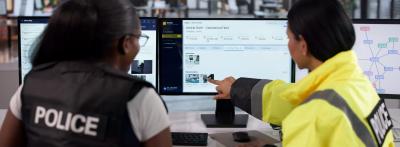
If cybercrime, data recovery, or the digital trails people leave behind fascinate you, then a career in digital forensics could put you at the center of modern investigations. Digital forensics investigators uncover, preserve, analyze, and explain electronic evidence for law enforcement agencies, government organizations, consulting firms, and private companies. As cybercrime, data breaches, and technology-driven investigations continue to increase, demand for digital forensics professionals grows rapidly.
The path into digital forensics is not as straightforward as many people assume. Some investigators begin with degrees in cybersecurity, computer science, digital forensics, or another related field, while others find a pathway into the field from law enforcement, information technology, or military backgrounds. Certifications, hands-on experience, and specialized training can all play a role in building a successful career.
Whether you are a student exploring your options or a working professional considering a transition, understanding the skills needed for the field and the most practical routes will help you better understand how to become a digital forensics investigator, and it will help you work toward your goals with greater confidence.
What Does a Digital Forensics Investigator Actually Do?
Before investing time and money into a digital forensics career path, it helps to understand what the work looks like in practice. Digital forensics investigators handle sensitive digital evidence that may be used in criminal prosecutions, civil litigation, internal corporate investigations, or incident response efforts. The job is detail-oriented and often at high stakes; even small mistakes can compromise evidence or render it inadmissible in court.
Typical digital forensics responsibilities include:
- Recovering deleted, hidden, or damaged files from digital devices.
- Preserving the chain of custody to ensure evidence remains legally defensible.
- Analyzing computers, smartphones, tablets, other devices, servers, and cloud storage environments for relevant data.
- Documenting findings and writing clear, comprehensive reports for investigators, attorneys, or clients.
- Testifying as an expert witness in court or legal proceedings when required.
Depending on the employer, you may see similar roles listed under titles such as digital forensic analyst, cyber forensic investigator, or computer forensics examiner.
Two Paths In: Know Which One Is Yours
There are multiple routes into digital forensics, and most professionals enter through one of two broad pathways: the law enforcement track or the private sector track. Both can lead to rewarding careers investigating digital evidence, yet they differ significantly in necessary skills, hiring requirements, training models, advancement opportunities, and daily responsibilities.
Someone interested in supporting criminal investigations may find the public sector to be a natural fit. In contrast, someone drawn to cybersecurity, incident response, or corporate investigations may be a better fit for the private sector. Understanding these distinctions early can help you avoid years of unnecessary detours and help you focus your education, certifications, and job search on the path that aligns with your goals.
The Law Enforcement Track
The law enforcement route is the path traditionally associated with digital forensics. On this track, investigators work for local, state, or federal agencies and support criminal investigations involving computers, mobile devices, cloud accounts, and other digital evidence. Depending on the agency, a professional might begin as a sworn law enforcement officer and later specialize in digital forensics, or they may be hired directly into a civilian forensic examiner role.
This path typically involves extensive background checks, strict hiring standards, and specialized training provided by the agency. Much of the work focuses on collecting evidence for criminal cases, executing search warrants, assisting detectives, and preparing findings for prosecutors. Court testimony is also often a regular part of the job.
While the hiring process can be lengthy, agencies frequently invest heavily in employee training and professional development. For individuals motivated by public service and criminal investigations, this route is oriented toward a direct role in helping solve crimes while supporting the justice system.
The Private Sector Track
The private sector path has expanded rapidly as organizations face increasing cyber threats, data breaches, insider threats, and regulatory requirements. Professionals on this track commonly work for:
- Cybersecurity firms
- Consulting companies
- Law firms
- Financial institutions
- Healthcare organizations
- Technology companies
- Corporate security departments
Unlike the law enforcement route, employers often place greater emphasis on technical skills, industry certifications, internships, and hands-on experience. Many candidates enter through cybersecurity, information technology, or incident response roles before specializing in digital forensics. Investigations often involve employee misconduct, intellectual property theft, ransomware incidents, compliance reviews, or civil litigation support.
Private-sector positions offer a wide variety of investigative work and often provide more flexibility in career progression. Some professionals move into consulting, where they assist multiple clients across different industries. Others specialize in areas such as cloud forensics, mobile forensics, or breach investigations. For those interested in combining technical expertise with business and cybersecurity challenges, the private sector offers a broad and growing range of opportunities.
Build Your Foundation: The Right Degree for This Field
While there are exceptions, most entry-level digital forensics positions require at least a bachelor's degree. Employers need candidates who understand the technical side of digital evidence, in addition to the legal and investigative principles that govern its use.
The best degree for a career in digital forensics depends on your professional goals. For example:
- Computer science programs provide a strong foundation in programming, operating systems, and data structures.
- Cybersecurity degrees focus on networks, threats, incident response, and security operations.
- Criminal justice programs can be valuable for students pursuing law enforcement careers, particularly when paired with technical coursework.
- Specialized digital forensics degrees combine these disciplines and offer targeted training in evidence collection, forensic tools, and investigative procedures.
Different levels of education offer different benefits at different points in one's career:
- Associate degree - This degree serves as an entry point to the field. An associate degree in digital forensics, like the one available through Champlain College Online (CCO), is ideal for building technical fundamentals before transferring or specializing.
- Bachelor's degree - A bachelor's degree provides a broad and thorough foundation and is a standard entry-level requirement for most digital forensics roles.
- Master's degree - CCO offers a Master of Science (MS) in Digital Forensic Science and an MS in Digital Forensic Analytics. Graduate degrees like these help professionals gain a competitive edge for senior positions, federal agencies, and consulting roles.
As a career progresses, advanced education becomes increasingly valuable. A master's degree can help qualify professionals for leadership roles, federal positions, expert consulting work, and highly specialized investigations.
Get Your Hands on Real Work Before the Job Title
Employers value practical experience because digital forensics is a hands-on discipline. Long before you land your first digital forensics role, you can begin developing the technical and investigative skills that employers expect to see.
One common route is through entry-level IT positions. Roles such as IT support specialist, network analyst, or systems engineer provide exposure to operating systems, networks, troubleshooting, and enterprise technology environments. This helps aspiring professionals become familiar with the same systems that digital forensic investigators examine during investigations.
Internships are another valuable stepping stone. Opportunities with law enforcement agencies, cybersecurity firms, consulting companies, or corporate security teams can provide firsthand exposure to evidence handling, forensic tools, and investigative workflows.
Aspiring professionals can also build experience independently. Capture the Flag (CTF) competitions challenge participants to solve realistic forensic and cybersecurity scenarios, helping them develop analytical thinking and problem-solving skills.
Finally, setting up a personal forensic lab is an excellent way to explore, learn, and hone your skills. Open-source tools (such as Autopsy and Wireshark) allow you to practice analyzing files, network traffic, and digital artifacts in a controlled environment.
Which Certifications Should You Pursue and When?
Certifications play an important role in digital forensics because they provide independent validation of your skills and knowledge. Employers offer evidence that you can work with forensic methodologies, tools, and evidence-handling procedures at a professional level. In some environments, certifications also help qualify personnel to use specialized forensic platforms or participate in official investigations.
Rather than chasing every credential available, focus on certifications that align with your current career stage and long-term goals. The most effective certification path looks very different for someone entering the field than it does for an experienced investigator pursuing advanced specialization.
Starting Out
For individuals who are new to the field, certifications should reinforce foundational skills. One of the most respected starting points is the GIAC Certified Forensic Examiner (GCFE). Widely regarded as the entry-level GIAC credential for digital forensics professionals, GCFE focuses on Windows-based forensic investigations, evidence acquisition, artifact analysis, and reporting. It is designed to be approachable for candidates with limited field experience while still carrying significant industry credibility.
The Computer Hacking Forensic Investigator (CHFI) certification from EC-Council is another common entry-level option. CHFI provides broad exposure to forensic processes, investigative methodologies, and evidence handling across multiple environments. While organizations vary in their preferences, CHFI can help demonstrate commitment to the field and establish baseline knowledge.
In many corporate environments, CompTIA Security+ is also highly valuable. Although it is not specifically a digital forensics certification, it validates core cybersecurity concepts and is often viewed as a prerequisite or co-requisite for technical security roles.
Together, these credentials can help entry-level professionals demonstrate and build a strong foundation before moving into more advanced forensic specializations.
Mid-Career and Specialization
Once professional experience conducting investigations has been acquired, the certification landscape changes significantly. At this stage, employers look for evidence of advanced analytical capabilities, incident response expertise, and specialized forensic knowledge.
The GIAC Certified Forensic Analyst (GCFA) is widely considered the industry standard for experienced practitioners. It focuses on advanced forensic investigations, incident response, threat analysis, memory forensics, and anti-forensics techniques. Many organizations view GCFA as a benchmark credential for senior-level forensic investigators and incident responders.
For professionals pursuing the law enforcement track, the Certified Forensic Computer Examiner (CFCE) from IACIS carries substantial weight. CFCE is closely aligned with courtroom expectations, evidence standards, and investigative rigor. Since it requires demonstrated casework experience, candidates should plan their career progression accordingly, rather than treating it as an early-career certification.
Specialists may also pursue credentials aligned with emerging investigative needs. The GIAC Advanced Smartphone Forensics (GASF) certification supports mobile device investigations, while tool-specific certifications such as EnCE can strengthen expertise with widely used forensic platforms.
These credentials become increasingly valuable as investigators develop niche expertise and move into senior technical, consulting, or expert witness roles.
Where Can You Specialize as You Advance?
Digital forensics offers multiple specialization paths as experience grows. While many investigators start with broad forensic work, most eventually develop expertise in a particular area. Your choice of specialization can influence the types of cases you handle, the certifications you pursue, and the industries where you'll find opportunities.
Major digital forensics specialties include:
- Computer/disk forensics - Traditional desktop, laptop, and server investigations. This remains the broadest area of practice and supports the widest range of hiring opportunities.
- Mobile device forensics - Focused on smartphones, tablets, and mobile applications. Demand continues to grow as mobile devices become primary sources of evidence in many investigations.
- Cloud forensics - An emerging specialty focused on collecting and analyzing evidence stored across cloud platforms and distributed environments.
- Network forensics - Investigating network traffic, logs, and communications to identify and reconstruct security incidents and intrusions.
- eDiscovery - A legal-focused specialty that supports civil litigation, regulatory investigations, and corporate compliance efforts through the collection and review of electronic records.
Start Building Your Digital Forensics Career at CCO
Whether a private or public sector path into digital forensics interests you, Champlain College Online (CCO) offers multiple entry points:
- Associate of Science in Digital Forensics for those building a foundation
- Master of Science in Digital Forensic Science and Master of Science in Digital Forensic Analytics for professionals who are ready to advance
To learn more about studying digital forensics with CCO, get in touch with admissions today.



Request Information
Connect with our admissions team to learn more about Champlain College Online today.

Request Information
I acknowledge that, by clicking the "submit" button, I am giving my express written consent to Champlain College and its representatives to contact me about educational opportunities via email, text, or phone, at the phone number above, including my mobile phone, using an automatic dialer, or pre-recorded message. Message and data rates may apply. I understand that my consent is not a requirement for enrollment, and I may withdraw my consent at any time.